
How to use this guide
Read this page in small steps. You can take one idea, leave the rest, and return later. These guides are written to support real families and care teams, not to add pressure.
- Start with the section that matches your immediate situation.
- Share the page with anyone helping you make memorial decisions.
- Use the sidebar to keep exploring at your own pace.
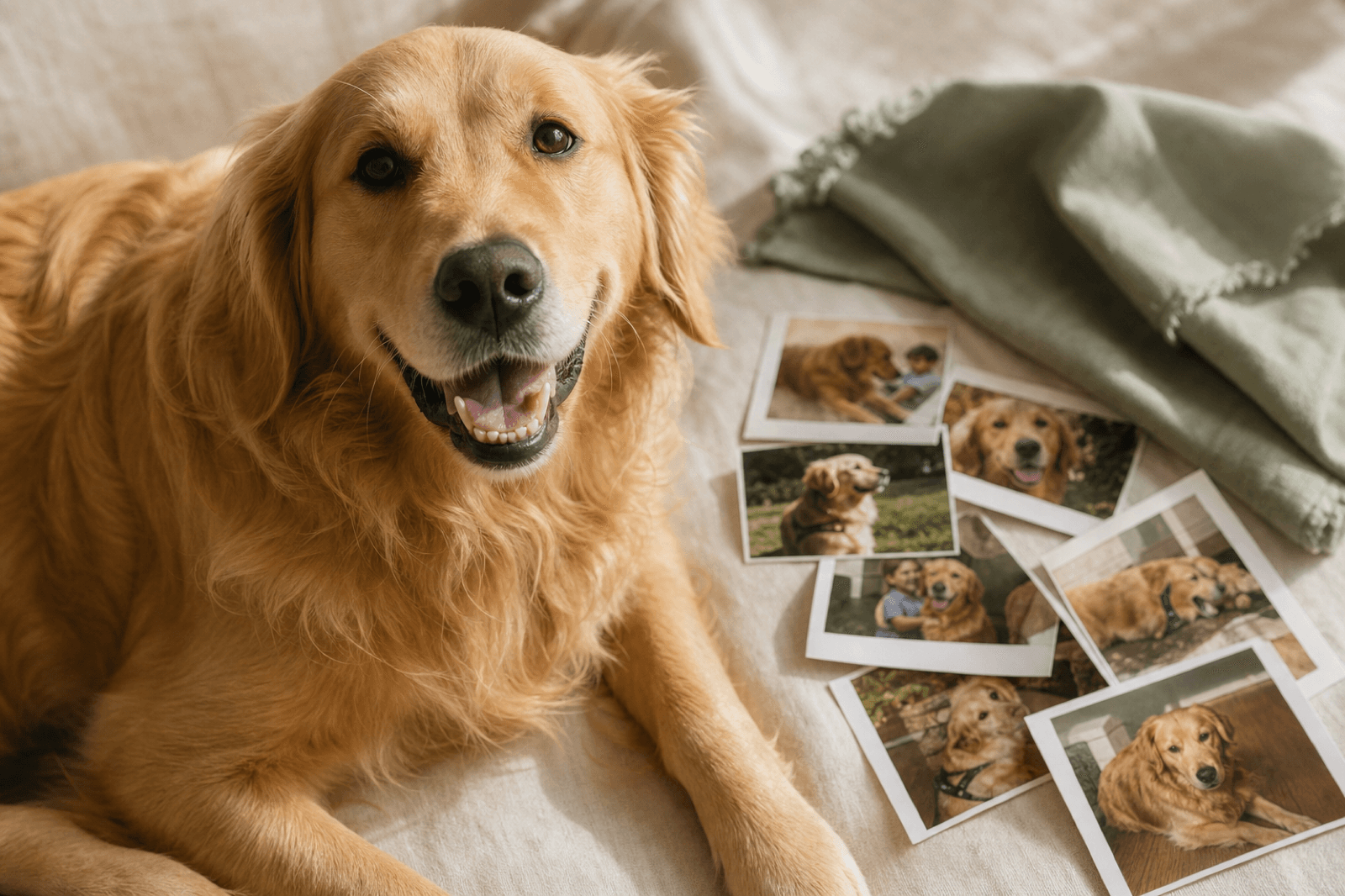
Strong memorial pages usually rely on fewer, better-labeled images. Curation matters more than volume.

Build a balanced image set
- One cover portrait with clear lighting.
- Two to four candid images from different years or settings.
- One relationship photo with people or companion animals.
Caption for future readers
Short captions with date and place are enough. This helps grandchildren, adopters, and extended family understand context years from now.
Use a simple ordering rule
Choose one sequence and keep it consistent: earliest-to-latest, home-to-outdoors, or daily-life-to-special-moments. Consistent ordering helps visitors follow the story without confusion.
Make the page feel like your companion
For photo checklist for a pet memorial page, focus on choosing images that show personality, relationships, and the seasons of shared life. A smaller set of carefully captioned photos usually feels kinder than a large unsorted gallery, especially for tired readers.
A calm next step
Pick one cover portrait, one ordinary-life photo, and one relationship photo before adding anything else. This keeps the work small enough to begin and specific enough to feel meaningful.
A gentle reminder
A meaningful memorial does not need to be completed in one day. Many people begin with a short tribute and one photo, then add stories as memory and energy return. Slow, steady progress is still progress.